More guides
60 articles
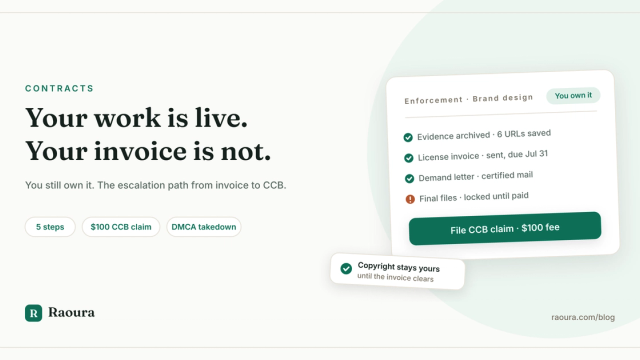
Client Used Your Work Without Paying? Here Are Your Options
Your client published the work and never paid the invoice. Good news: you almost certainly still own it. Here is the escalation path that actually works in the US, from the retroactive license invoice to the DMCA takedown to the $100 copyright small claims court that none of the top-ranking guides mention. Verified against primary sources in July 2026.
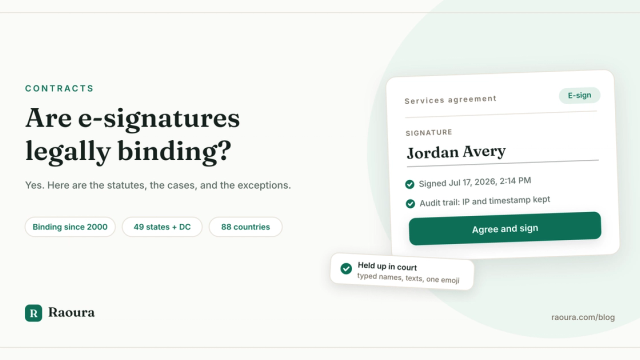
Are E-Signatures Legally Binding?
Every page ranking for this question is a signature vendor quoting itself. This one quotes the statutes: e-signatures have been binding in the US since 2000 under the ESIGN Act, 49 states run on UETA, courts have enforced a text message and a thumbs-up emoji, and the nine federal carve-outs almost never touch client work. Plus the four ways an e-signature actually fails, and what to keep in case a client denies signing.
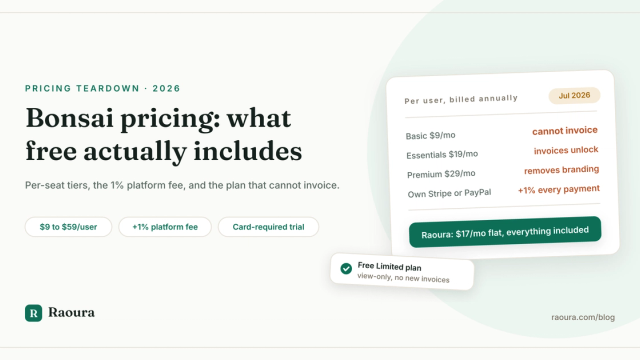
Bonsai Pricing (2026): What Free Actually Includes
Bonsai advertises plans from $9 per user per month, but the $9 and $15 tiers cannot send an invoice, the trial requires a credit card, and the only truly free plan is a view-only archive you get after canceling. Here is the full per-seat and fee math, verified against Bonsai's own pages.
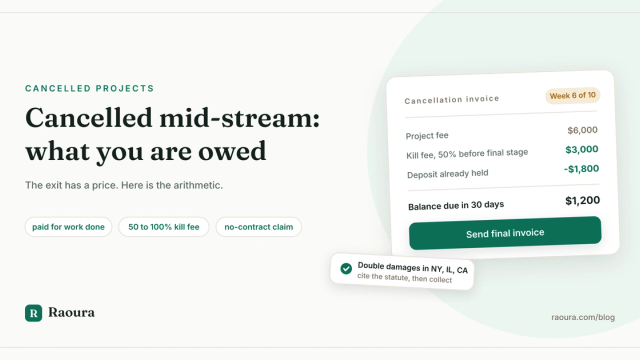
Project Cancelled Mid-Stream: What You Are Owed
A client cancelling a half-finished project is not a dead loss, it is an accounting question. What you can collect depends on four contract clauses, one legal doctrine that works even without a contract, and three state laws that put double damages behind your final invoice. Here is the full math: what you are owed in every scenario, a worked example on a $6,000 project, and the exact collection ladder from final invoice to small claims.
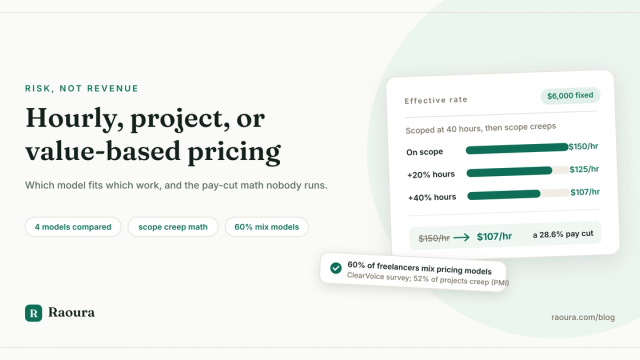
Hourly vs Project vs Value-Based Pricing: Choosing the Freelance Pricing Model That Fits the Work
We fetched the pages that rank for freelance pricing models in July 2026. The most complete one builds its case on a competitor marketplace's unsourced numbers (the famous 66 percent value-pricing premium traces to a table with no survey behind it), the most authoritative gives the actual model choice three bullet points, and one has not been touched since 2021. Here is the version with only verifiable numbers: what each model really sells, the scope creep math that turns a fixed price into an hourly pay cut, why the retainer is the model comparison posts keep skipping, and an honest answer to which model earns more.
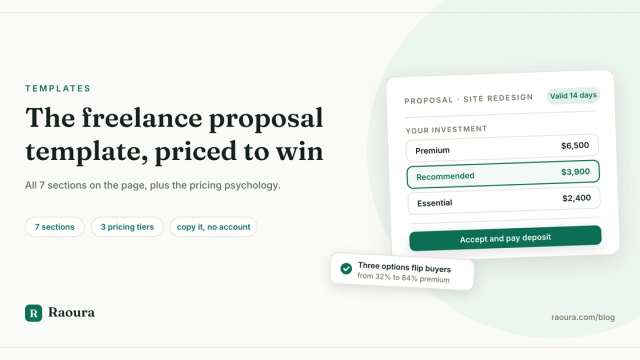
Freelance Proposal Template (With the Pricing Psychology)
Of the five top-ranking proposal template pages, four gate the template behind an account and zero say a word about pricing psychology. This one is different: the full seven-section template on the page, no signup, plus the research on anchoring, three-option pricing, and the 48-hour decision window that decides whether your proposal wins.
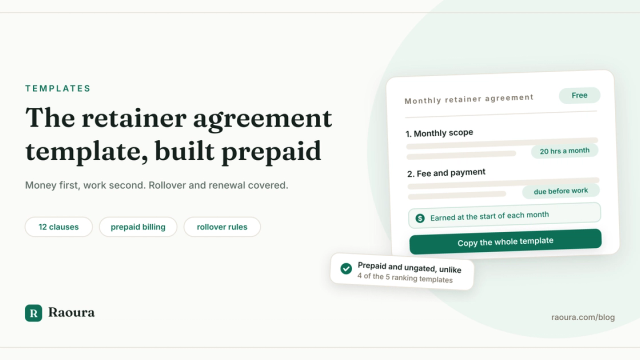
Freelance Retainer Agreement Template: The Prepaid Version, Annotated
Only one of the five top-ranking retainer templates is both ungated and genuinely prepaid; two of them bill the client after the work is done, which makes them invoicing schedules, not retainers. This one is built prepaid: the month's fee lands before the month's work starts. Every clause annotated, including the four nobody else covers: rollover hours, overage rates, rate changes at renewal, and what happens to unused money. Copy it. No signup.
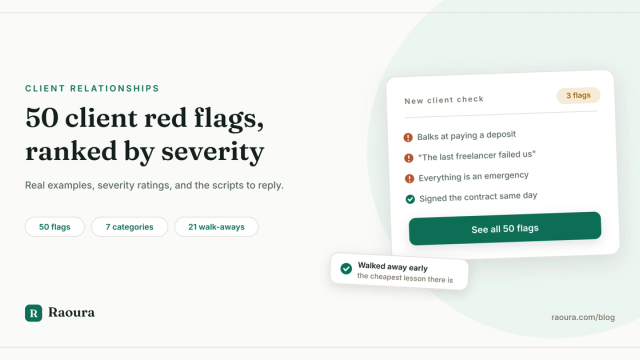
The Client Red Flags Database: 50 Real Warning Signs, Ranked by Severity
50 real client red flags from freelancers who lived them, sorted into 7 categories and 3 severity levels, with scripts to respond and the data on what ignoring them costs.
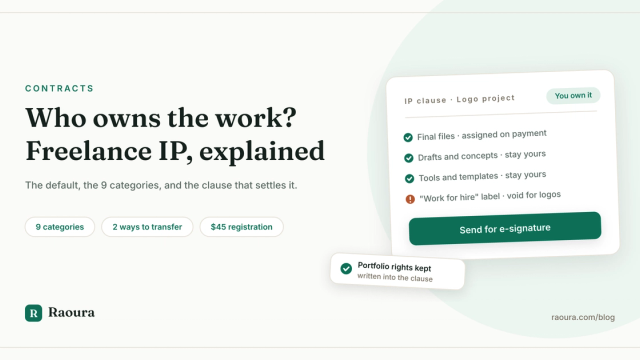
Who Owns the Work? Freelance IP Rights Explained
Most pages ranking for this question get the default backwards: they tell you the client owns freelance work. US copyright law says the opposite. This guide covers the real work-for-hire test (both prongs), what happens when there is no contract at all, the exact clause that keeps ownership and payment moving together, and the 2026 answers on AI-assisted work.
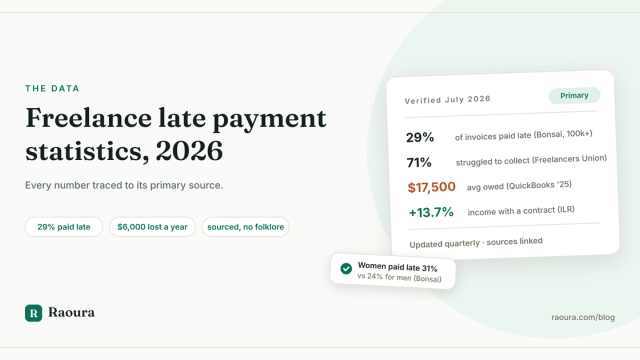
Freelance Late Payment Statistics (2026): Every Number Traced to Its Primary Source
Most late-payment statistics pages recycle each other's unattributed numbers. This one is different: every statistic below links to the original study with a note on who ran it, when, and how. Plus a section on the popular numbers we deliberately left out because nobody can trace where they came from.
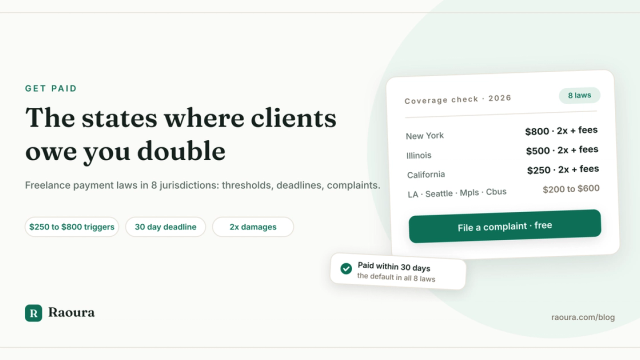
Freelance Payment Laws by State: Where the Law Now Collects for You (2026)
Three states and five cities now make late-paying clients owe you double the invoice plus attorney fees, and most freelancers covered by these laws have no idea. Here is every US freelance payment law in force in 2026: the exact dollar thresholds, the 30-day payment rule they all share, what you can recover, and the exact place to file a complaint in each jurisdiction, every claim traced to the statute text.
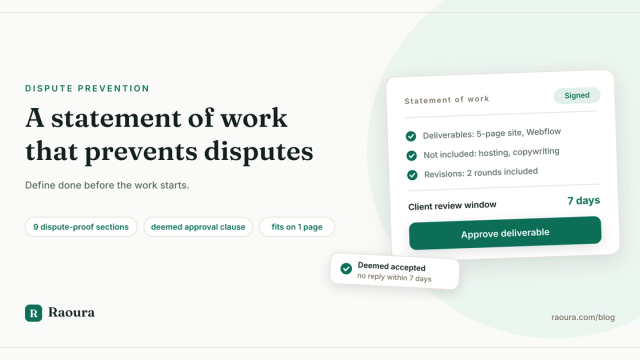
How to Write a Statement of Work That Prevents Disputes
Almost every freelance dispute traces back to a sentence that was never written: what done means, what is not included, how many revisions are in the price, and what happens when the client goes silent. The statement of work is where those sentences live. Here is the freelancer's version: the 9 sections, copy-paste acceptance and revision clauses, a deemed approval line that ends the endless-feedback problem, and how the same document satisfies the new freelance payment laws in New York, Illinois, and California.