More guides
60 articles
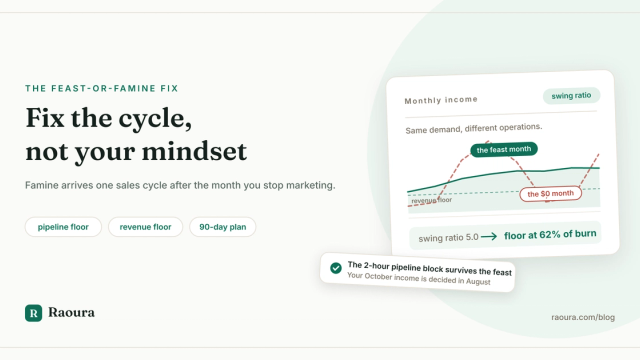
The Feast-or-Famine Fix (Operational, Not Motivational)
Every article about the feast-or-famine cycle tells you to hustle harder and stay positive. None of them explains the mechanism: famine arrives one sales cycle after the month you stopped marketing, which means your empty August was decided in June. This guide treats the cycle as an operations problem with four levers: a pipeline floor you never drop below, a recurring revenue floor, payment structures that flatten cash inside each project, and a buffer that absorbs what is left. Includes a worked 6-month trace of exactly where the famine comes from, a swing ratio metric to measure your own cycle, and a 90-day implementation plan.
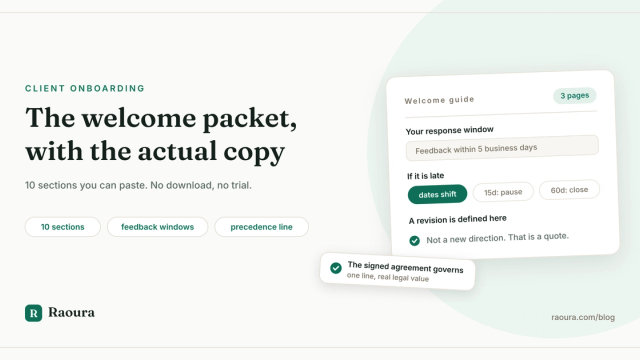
The Client Welcome Packet: 10 Sections, With the Actual Copy
Every page ranking for this term gives you a list of headings. None of them gives you a sentence you can paste. This is the full welcome packet with the copy written out, including the four words that cause most client disputes and the definitions that end them, feedback windows that carry a stated consequence, and the one line that stops your friendly summary from overriding your signed contract.
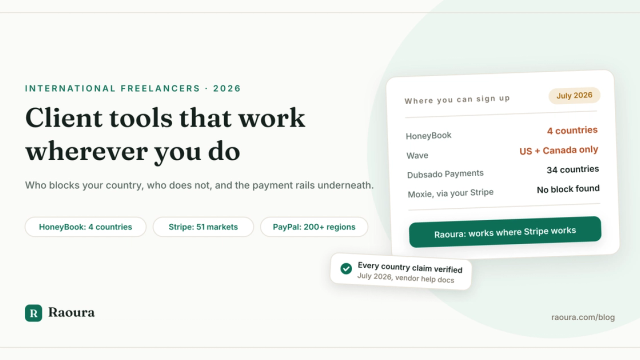
Client Tools That Do Not Block International Freelancers (2026)
HoneyBook supports exactly 4 countries. Most roundups never mention that, and the ones that do are already out of date. We verified where 7 client management tools actually let you sign up and get paid, and mapped the Stripe, PayPal, and Wise rails underneath them, so you can pick a tool that works where you live.
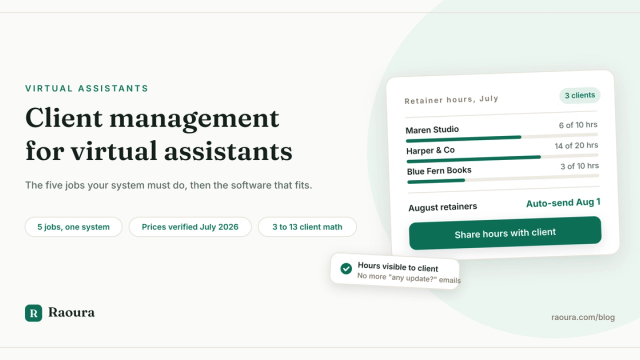
Client Management for Virtual Assistants: The System, Then the Software
Every page ranking for this search is a software vendor recommending itself, and when we checked their pricing tables against the vendors' own sites, five of the eight prices we could verify were stale or wrong. Here is what client management actually means when you are the assistant: the five jobs your system has to do, a price-verified tool table, and honest math on how many clients one VA can carry.
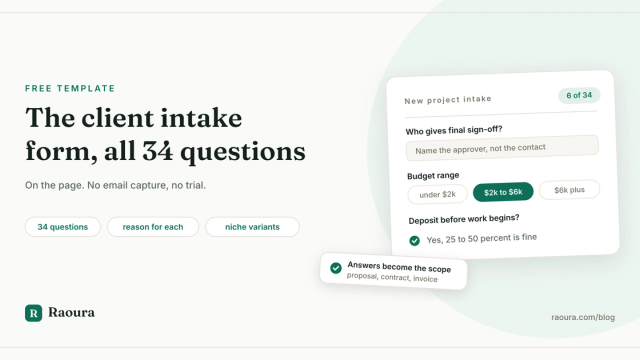
The Freelance Client Intake Form: All 34 Questions, Ungated
Every page ranking for this keyword either gates its template behind a trial, links you to somebody else's, or promises 35 questions and delivers 15. This one publishes the whole form on the page: 34 questions in submission order, the reason for each, the nine commercial questions no other ranking page asks, variants for designers, writers and developers, and what to do with the answers once they land.
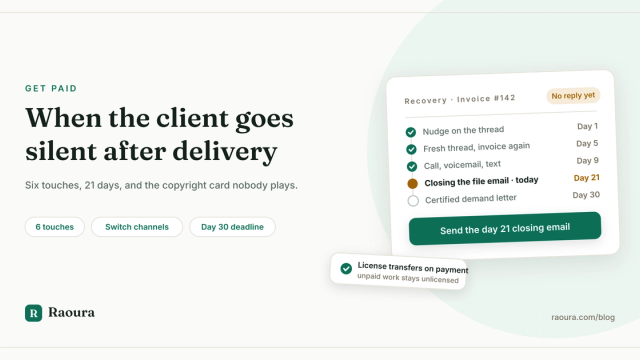
Client Ghosted You After Delivery: The Recovery Playbook
You delivered the work, sent the invoice, and the client vanished. Before you panic or lawyer up, know this: most ghosts are late payers, and you hold more leverage than every page ranking for this problem admits. Here is the 21-day recovery sequence, the copyright card nobody mentions, and the exact day silence should turn into enforcement.
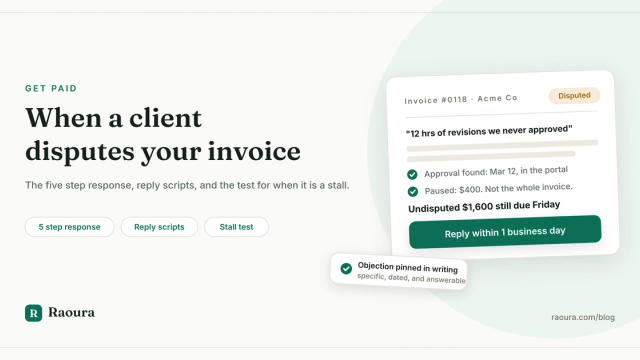
Client Disputes Your Invoice: The Step by Step Response
A disputed invoice is not the same problem as an unpaid one, and treating them the same is how freelancers lose money they earned. Here is the five step response: acknowledge fast, pin the objection down in writing, check your paper trail, decide whether to concede, compromise, or hold, and close it out with a corrected invoice. With reply scripts and verified legal endpoints for when the dispute is really a stall.
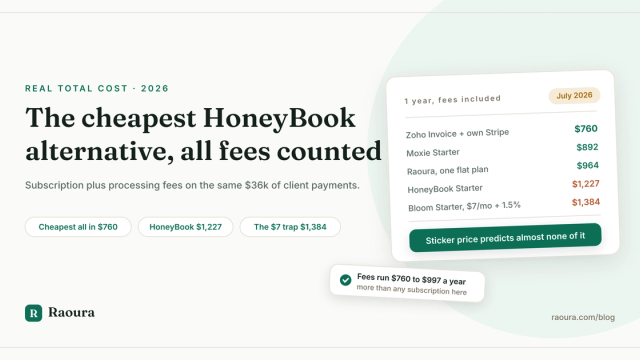
The Cheapest HoneyBook Alternative in 2026 (Ranked by Real Total Cost)
Every cheap-HoneyBook-alternative list compares sticker prices. We computed subscription plus payment processing fees for 12 setups at $36,000 of client revenue, and the ranking flips: the cheapest paid plan on paper lands dead last, and a $0 tool wins by $467 a year.
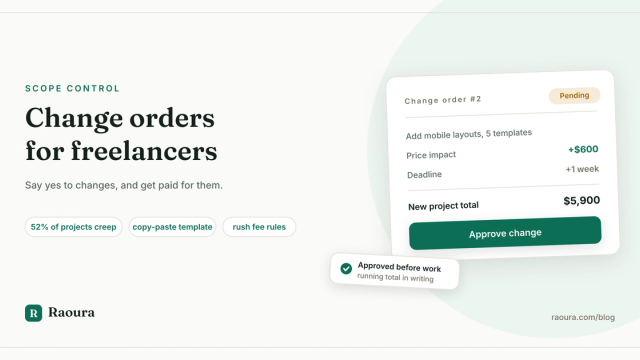
Change Orders for Freelancers: The Tool Construction Perfected and You Never Got
You have scripts for saying no to scope creep. What you are missing is the tool for saying yes and getting paid: the change order. Construction formalized it decades ago, and almost no freelancer uses it. Here is the whole system: what goes in one, the copy-paste template and contract clause, how to price changes, whether an email yes is legally binding, and what to do when a client wants the work but won't sign.
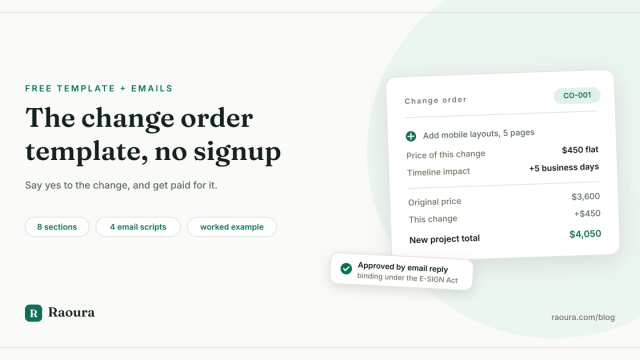
Change Order Template for Freelancers (Plus the Email That Introduces It)
Every page ranking for change order template is written for construction: owner, contractor, architect, three signature lines. None of them includes the thing a freelancer actually struggles with, which is the email that introduces the change order without souring the client relationship. Here is both: an 8-section template built for services work, a filled-out example with the math shown, and four copy-paste emails for every moment in the change order conversation.
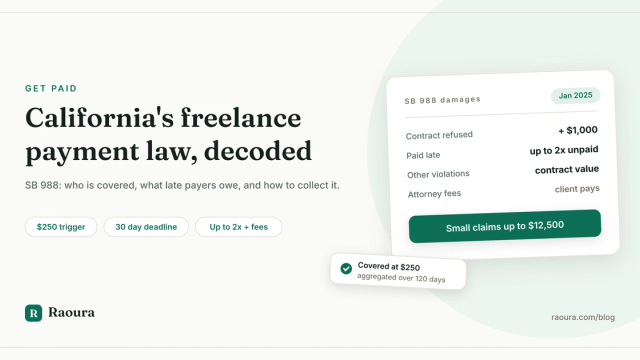
California's Freelance Worker Protection Act (SB 988), Explained for the People It Protects
Since January 2025, California clients owe you a written contract at $250 and payment within 30 days, and late payers can owe up to double the invoice. But there is no agency to complain to, the covered-professions list has surprising holes, and every page ranking for this law is written for the companies hiring you. Here is the freelancer's version, every claim traced to the statute.
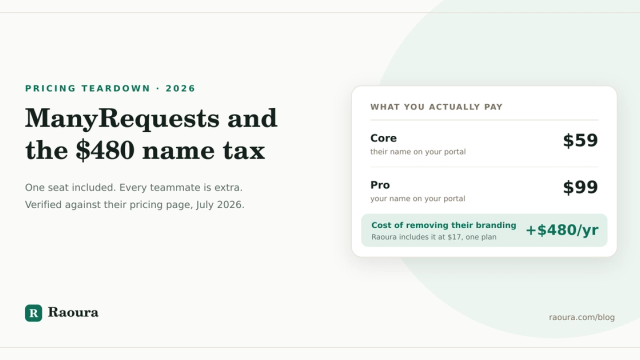
ManyRequests Pricing (2026): The Seat Math and the $480 Branding Tax
ManyRequests advertises $59 and $99 a month. Neither number is what you pay. Here is the real cost at 1, 3, 5 and 10 people, verified against their pricing page, plus the two features most buyers assume are included and are not.
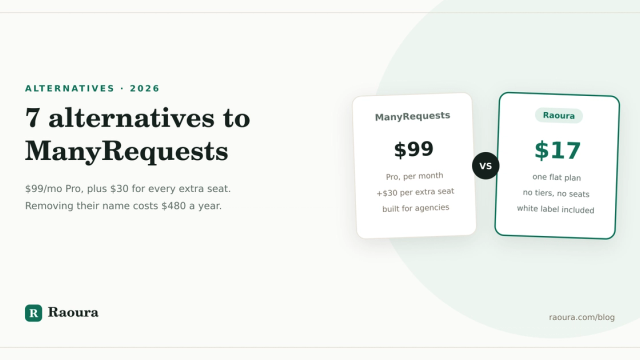
ManyRequests Alternatives (2026): 7 Tools Priced Against the Seat Math
ManyRequests ranks its own page for this query, and every other result is a vendor ranking itself first. We priced 7 alternatives against ManyRequests' real cost, including the $480 a year you pay just to remove their name from your portal.
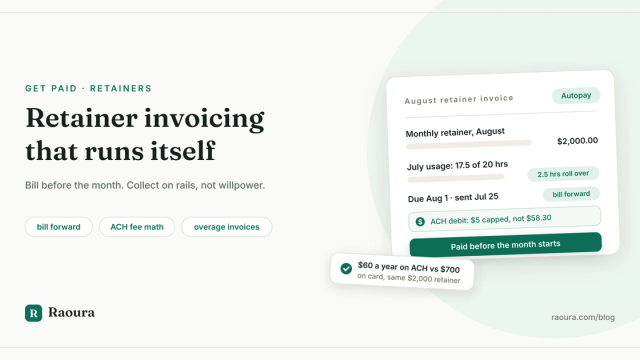
Retainer Invoicing: Billing That Runs Itself
We fetched six pages ranking for retainer invoice in July 2026 and none of them answers the questions that actually decide whether your retainer pays you on time: do you bill before or after the month, what goes on the line item, how do you invoice overage hours, and what happens when the autopay fails. One template page even serves an estimate spreadsheet as its retainer download. Here is the whole operating system: timing, line items, fee math that saves $639 a year on one client, proration, and dunning.
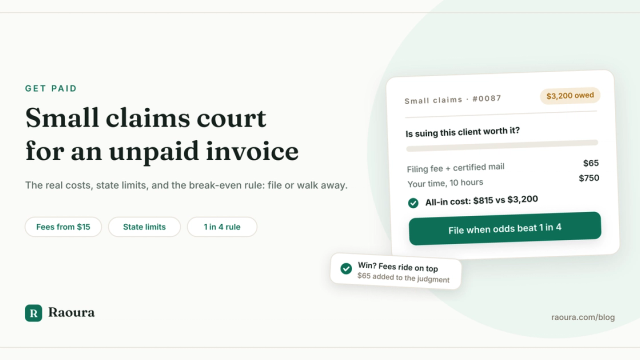
Small Claims Court for a Freelance Invoice: Worth It?
Suing a client in small claims court costs $15 to $305 in filing fees, caps out between $2,500 and $25,000 depending on your state, and ends with a judgment the court will not collect for you. Here is the honest math on when filing beats walking away, verified against primary sources in July 2026.
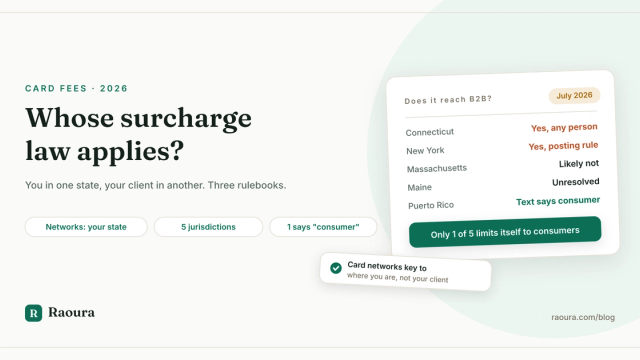
Whose Surcharge Law Applies When Your Client Is in Another State?
You are in Texas. Your client is in Connecticut. You want to add 3% for the card payment. Three separate rulebooks decide whether you can, and only one of them is actually about your client's state. Here is what the card networks say, what the five restricting statutes actually say when you read their operative sentences, and why exactly one of those five limits itself to consumers.
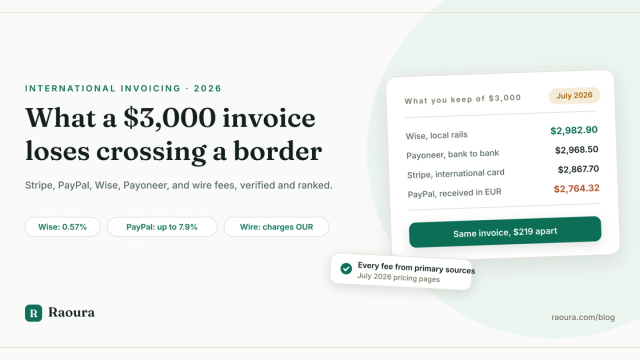
How to Invoice International Clients (Real Fee Math for 2026)
Every guide to international invoicing is written by a payment vendor and none of them prints a single verified fee. We pulled the current pricing pages for Stripe, PayPal, Wise, Payoneer, and two major US banks, then ran the math on a $3,000 invoice from an EU client. The spread between the cheapest and most expensive channel is about $219, and the default choice is one of the worst.
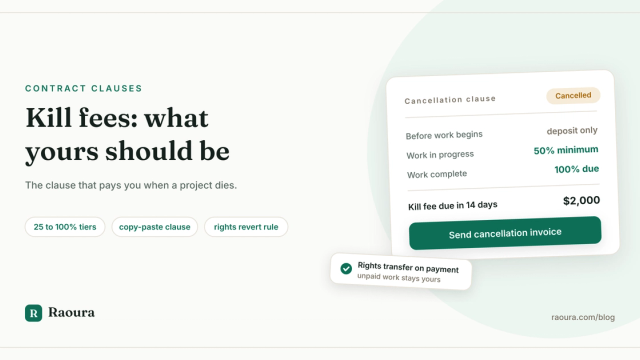
Kill Fees: What They Are and How Much Yours Should Be
A client can cancel a project for reasons that have nothing to do with you: budgets vanish, priorities shift, companies reorganize. A kill fee decides whether that cancellation costs them or you. Here is what a kill fee is, the sourced percentage norms by profession (including where the numbers actually come from), a copy-paste clause with stage tiers, why tiered fees hold up in court better than flat ones, and how to negotiate a magazine's kill fee up or out.
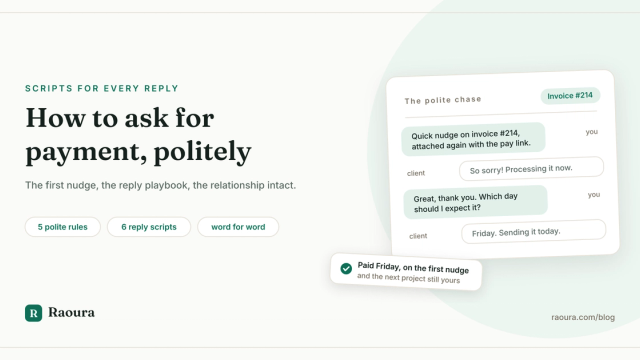
How to Ask a Client for Payment Politely (Without Losing the Client)
The pages that rank for this search are written for accounts receivable departments, and it shows: corporate templates, collections agencies by paragraph four, and one that suggests charging $90 a day in late fees. You are one person asking the same human who approves your next project. This is the freelancer version: five rules that keep a payment ask polite, word-for-word scripts for the first nudge and every awkward reply that follows, and the data showing that people who chase get paid faster without losing clients.
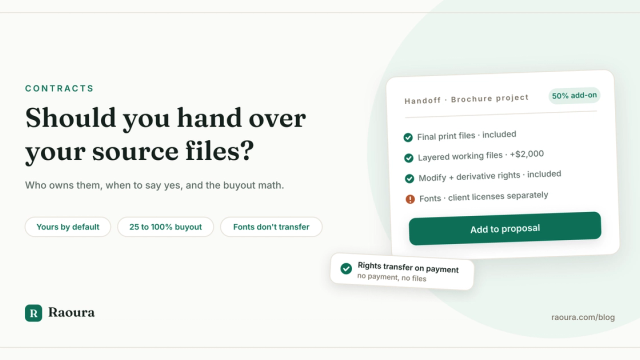
Should You Hand Over Source Files? What Clients Own, What You Keep, and What to Charge
The client paid for the logo, the brochure, the website, the photos. Now they want the working files behind them, and the two most-quoted guides on this question give you opposite advice. Here is what US copyright law actually says about who owns source files by default, a norms table across six freelance disciplines, the 25 to 100 percent buyout math, and the contract wording that turns the whole question into a line item instead of a breakup fight.
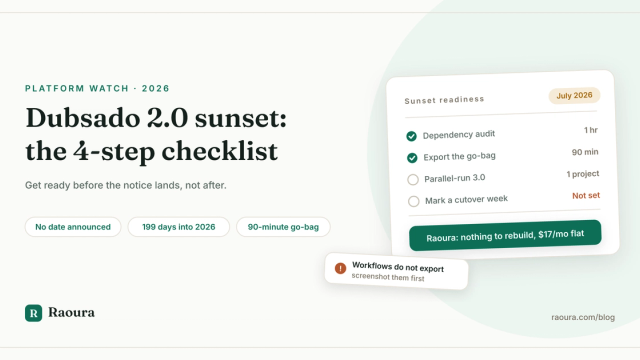
The Dubsado 2.0 Sunset Checklist: What to Do Before Legacy Shuts Down
Dubsado promised to sunset 2.0 'sometime in 2026' with 'plenty of advance notice'. We are 199 days into 2026 and no notice has been published. Here is the four-step checklist that makes the announcement, whenever it lands, a non-event for your business.
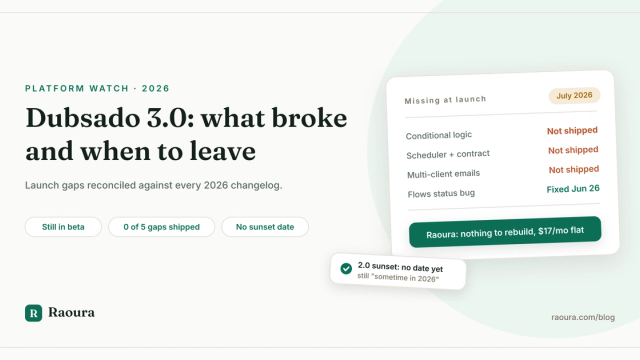
Dubsado 3.0 Problems: What Broke, What Got Fixed, and When to Leave
Eight months after the 3.0 rollout, Dubsado's own login page still calls it a beta. We reconciled the launch complaints against every 2026 changelog entry: what actually broke, what got fixed, what is still missing, and how to decide between 3.0, staying on 2.0, and leaving.
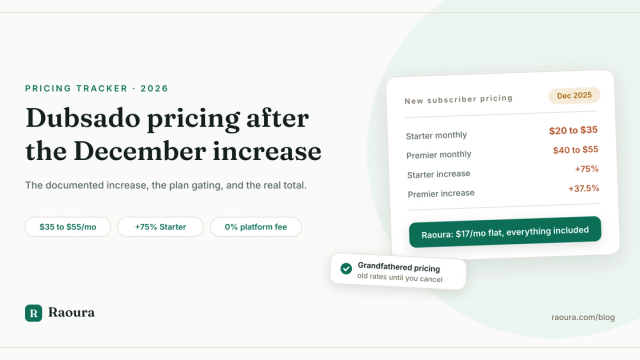
Dubsado Pricing (2026): The Full Teardown After the December Increase
Dubsado costs $35 to $55 per month since December 1, 2025, but two of the top five Google results still show the old $20 and $40 prices. Here is the documented increase, the Starter vs Premier gating that pushes most solos to the higher tier, the setup costs the pricing page never mentions, and how the total compares.
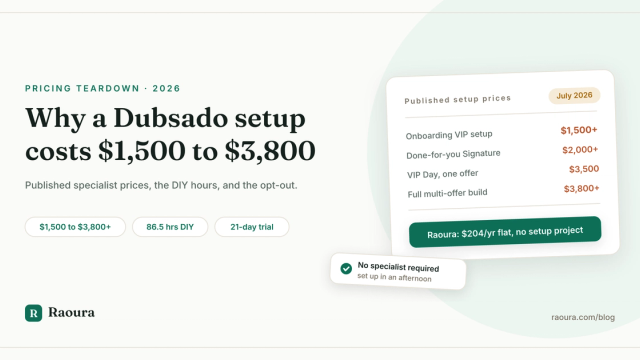
Why a Dubsado Setup Costs $1,500 to $3,800 in Specialist Fees (2026)
Dubsado's subscription is $35 to $55 per month, but a done-for-you setup from a Certified Specialist runs $1,500 to $3,800 or more. Here is where that money goes, what you actually get, and how to decide between paying, doing it yourself, and picking a simpler tool.