More guides
60 articles
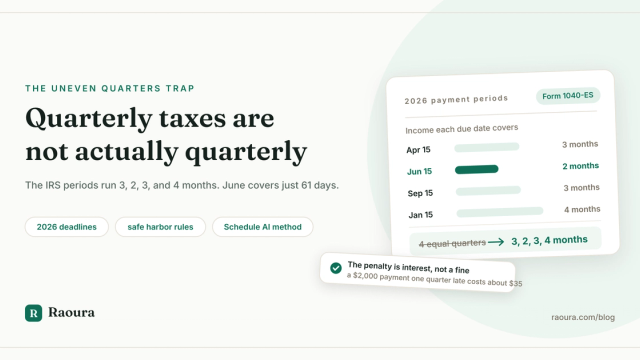
Quarterly Estimated Taxes for Freelancers (And the Uneven Quarters Trap)
The IRS calls them quarterly taxes, but the four payment periods are 3, 2, 3, and 4 months long, and that mismatch is where freelancers get hurt. We fetched the top-ranking pages in July 2026: one maps the deadlines to normal calendar quarters (wrong), another lists June 16 as a 2026 due date (that was 2025's date), and a third publishes 2025 deadlines under an April 2026 update stamp. Here is the version with every date and rule checked against the 2026 Form 1040-ES: who has to pay, the safe harbor that ends the guessing, what a missed payment actually costs at the current 7% rate, and the Schedule AI method that saves you money when your income is lumpy.
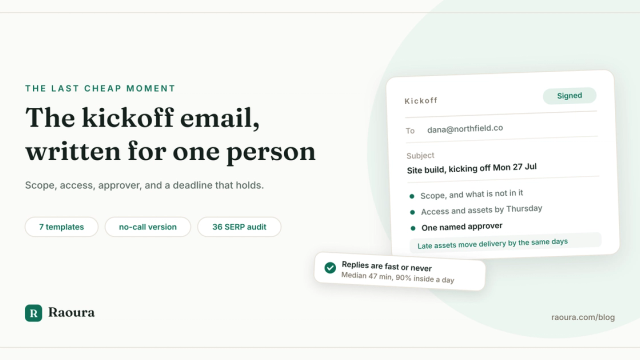
The Project Kickoff Email: 7 Templates for Solo Freelancers
Every page ranking for this term writes the kickoff email for a project manager with a team, a sponsor, and a slide deck. You have none of those. This is the freelancer version: seven templates including the async kickoff with no call, the access request, the nudge when the client goes quiet, and the recap email that becomes your record when the scope argument starts.
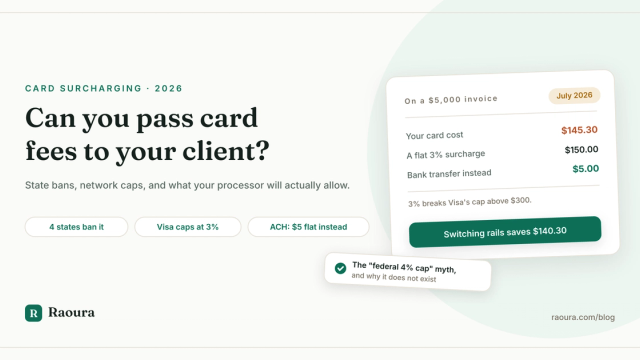
Can You Pass Card Fees to Your Client? Surcharging Rules for Freelancers
Four US jurisdictions still ban credit card surcharges outright, three more have bans on the books that courts have blocked, and the flat 3% every guide recommends actually breaks Visa's cap on any invoice over $300. Here is what is legal, what your processor will actually let you do (less than you think), and the alternative that saves you more than surcharging ever would.
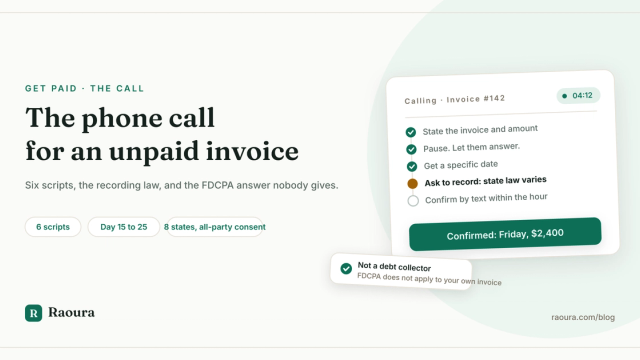
The Overdue Invoice Phone Call: A Script That Stays Friendly
Somewhere around day 15 to 25 of an overdue invoice, email stops working and nobody tells you what to say on the phone. Here is the actual call structure, word-for-word scripts for six scenarios, the state recording-consent laws nobody names, and a clear answer on whether the FDCPA applies to a freelancer collecting their own invoice. Verified against primary sources in July 2026.
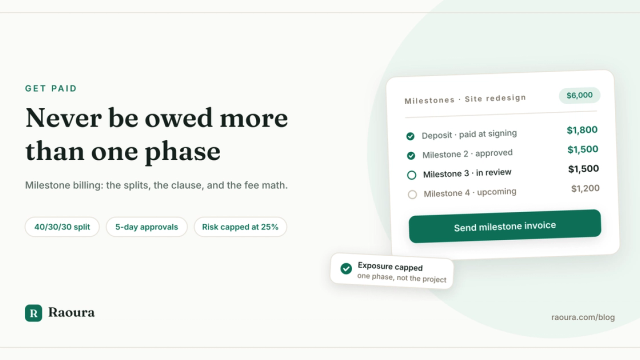
Milestone Billing: Never Be Owed More Than One Phase
Most milestone payment advice stops at \"split the project into chunks.\" This guide gives you the percentage splits by project size, the deemed acceptance clause that stops approval stalls, the exposure math showing exactly how much you can lose under each structure, and the invoicing mechanics, including the 90 cents it actually costs to de-risk a $6,000 project.
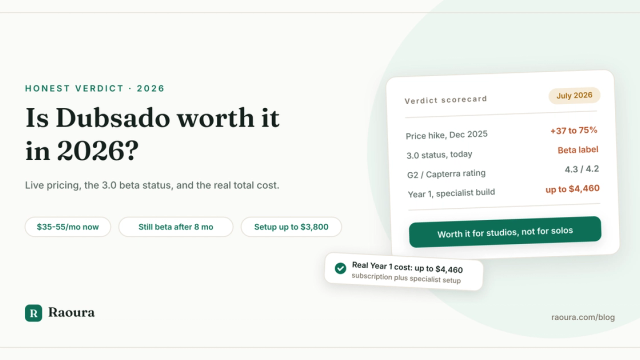
Is Dubsado Worth It in 2026? An Honest Verdict After the Price Hike and the 3.0 Beta
Dubsado now costs $35 to $55 a month, its 3.0 rebuild still calls itself a beta eight months after launch, and a paid setup can run past $3,800. Here is who it is actually worth it for and who should look elsewhere.
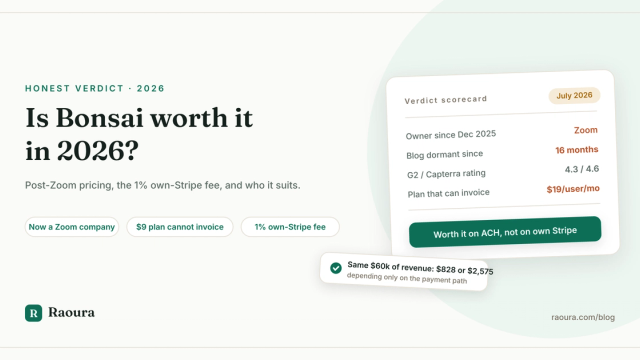
Is Bonsai Worth It in 2026? An Honest Verdict After the Zoom Acquisition
Bonsai is now owned by Zoom, its blog has been dormant for 16 months, and the plan that can actually invoice a client starts at $19 per user per month, not the $9 on the pricing page. Here is who Bonsai is genuinely worth it for in 2026 and who should look elsewhere.
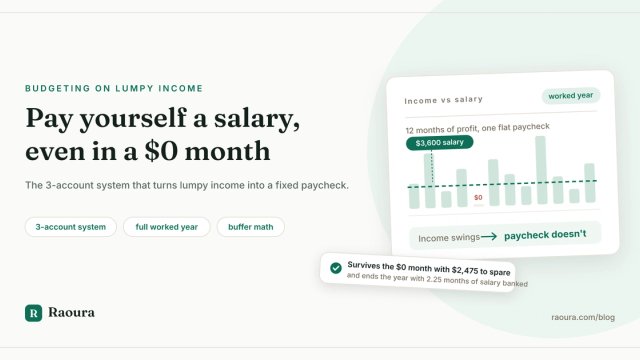
Budgeting on Lumpy Income: Pay Yourself a Salary
The pages that rank for irregular income budgeting tell you to budget your lowest month or your average month. Both fail for freelancers: one plans around a number that leaves half your income unassigned, the other overspends in every below-average month. The fix is a fixed monthly salary paid out of a business buffer account. We built a full worked year to prove it: a freelancer averaging $5,300 a month pays themselves $3,600, hits a $0 month in May, and still ends the year with 2.25 months of salary banked.
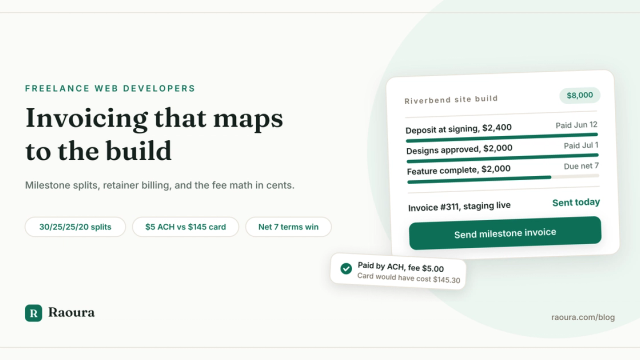
Invoicing for Freelance Web Developers: Milestones, Retainers, and the Fee Math in Cents
Before writing this guide we fetched the top-ranking pages for this search. They are template downloads wrapped in signup forms, the only practitioner-written how-to was last touched in March 2023, and not one ranking page includes a single processing-fee number. This is the version with the numbers: milestone splits mapped to a real build, retainer invoicing that runs itself, and what Stripe and PayPal actually take from a $5,000 milestone, computed to the cent and verified in July 2026.
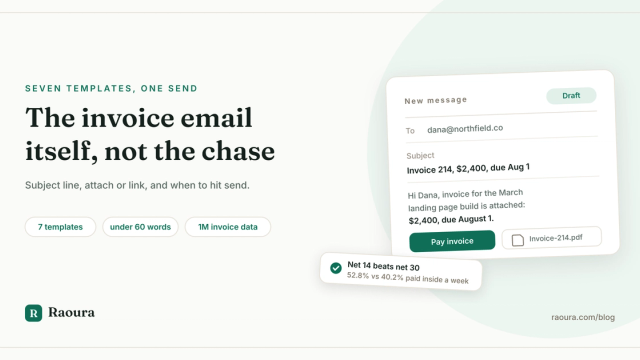
The Invoice Email: What to Write When You Send the Invoice Itself
Every page ranking for this keyword hands you chase emails. We fetched six of them in July 2026: between five of them there are 19 templates, only 9 are for the email that actually carries the invoice, and not one of the six tells you when to hit send. This is the other email, the one that decides whether you ever need a reminder: seven templates for seven situations, the subject line formula, the attach-or-link decision, and the wording that FreshBooks found across a million invoices correlates with getting paid.
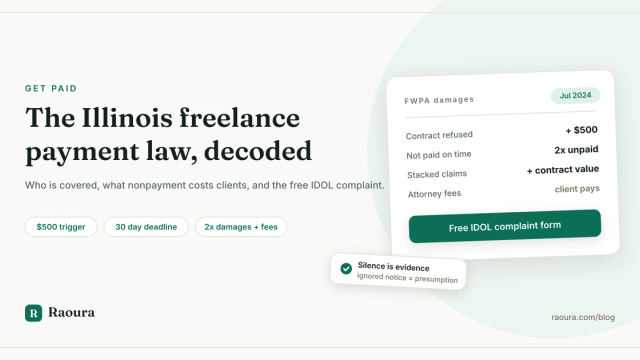
The Illinois Freelance Worker Protection Act, Explained for the Freelancers It Covers
Since July 2024, Illinois clients owe you a written contract at $500, payment within 30 days, and double damages if they stiff you, and there is a free state complaint form that turns their silence into evidence against them. Yet freelancers filed only 24 complaints in the law's entire first year. Here is the freelancer's version of the law, every claim traced to the statute and the state's own enforcement report.
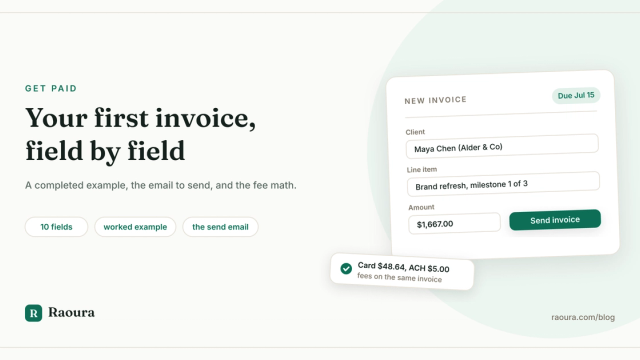
How to Write an Invoice as a Freelancer: A First-Invoice Walkthrough
We fetched the top-ranking invoice how-to guides in July 2026 and not one of them shows a completed example invoice. This walkthrough does: every field filled in with real numbers, the three-sentence email that carries it, and the fee math on actually getting paid.
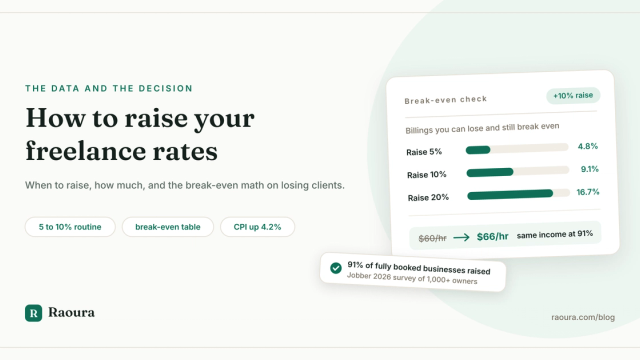
How to Raise Your Freelance Rates: The Data, the Math, and the Decision
We fetched the five pages that rank for how to raise freelance rates in July 2026. Every one of them anchors its inflation argument to 2022, the freshest was last touched in March 2025, and none of them shows you the math: a 10 percent raise breaks even if you lose up to 9 percent of your billings, and almost nobody loses that much. This is the decision guide: when to raise, how to pick the exact number, who to raise first, and what actually happens after you hit send.
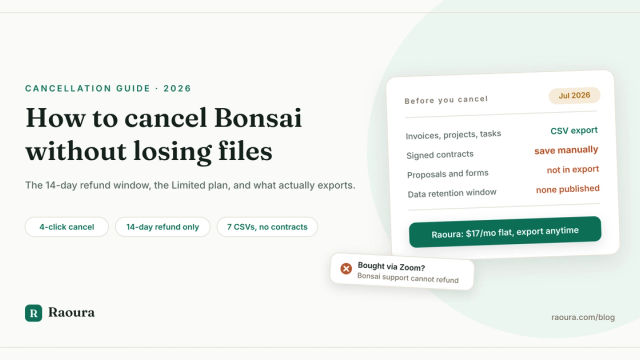
How to Cancel Bonsai (And What the Free Limited Plan Keeps)
Cancelling Bonsai takes four clicks, but cancel, deactivate, and delete are three different things with three different outcomes. Here is the exact path for each, the 14-day refund window that contradicts Bonsai's own Terms, what the free Limited plan really keeps, and the seven data types the export actually covers.
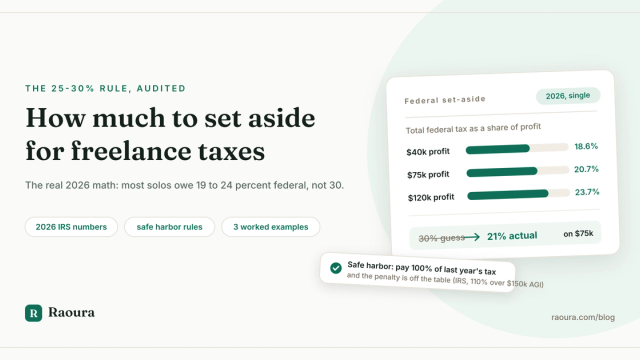
The 25-30% Rule: How Much to Set Aside for Freelance Taxes in 2026
Every page that ranks for this question says the same thing: set aside 25 to 30 percent. We fetched them in July 2026. One builds its worked example on a standard deduction from 2021, another mixes 2025 rates and 2026 brackets in the same calculation and contradicts its own totals, and not one mentions the safe harbor rules that turn the guess into a known-safe number. So we ran the actual 2026 math at three income levels. The honest answer: federal taxes for a typical solo run 19 to 24 percent of profit, and the last 5 to 10 points of the famous rule are really your state tax buffer.
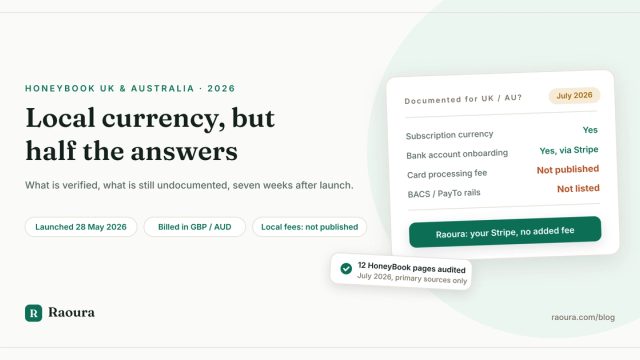
HoneyBook UK and Australia: Pricing and What Is Actually Different (July 2026)
HoneyBook launched in the UK and Australia on 28 May 2026, its first markets outside North America. Subscriptions are billed in GBP and AUD, but almost nothing else has been localised in the documentation. We audited 12 HoneyBook pages to find what is published, what is missing, and the one structural difference nobody has written about: UK and Australian accounts run on Stripe while US accounts do not.
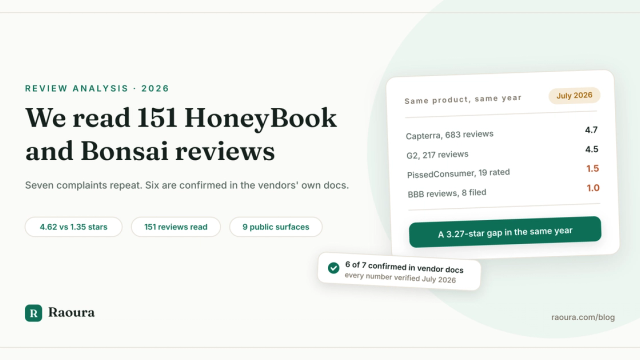
We read 151 HoneyBook and Bonsai reviews: the 7 complaints that keep repeating
HoneyBook holds a 4.7 on Capterra and a 1.0 on the Better Business Bureau. Same product, same year. We read 151 individual reviews and complaints across nine surfaces to find out which criticisms actually repeat, then checked each one against the vendors' own help documentation. Six of the seven are confirmed policy, not bad luck.
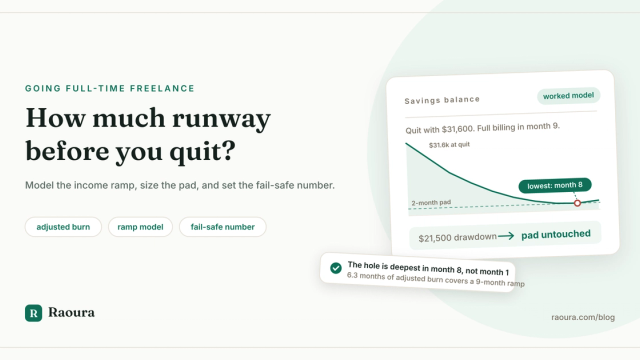
How Much Runway Before Going Full-Time Freelance
The standard advice says save 3 to 6 months of expenses before you quit. That number was built for job loss, not for building a business, and it quietly assumes your expenses stay the same after you hand in your notice. They do not: health insurance alone can add $600 or more a month, and your income does not switch on the day you start. We built a worked ramp model to show what actually happens: a freelancer with a $5,050 adjusted monthly burn who reaches full billing in month nine burns through $21,500 of savings first, and the deepest point of the drawdown arrives in month eight, not month one.
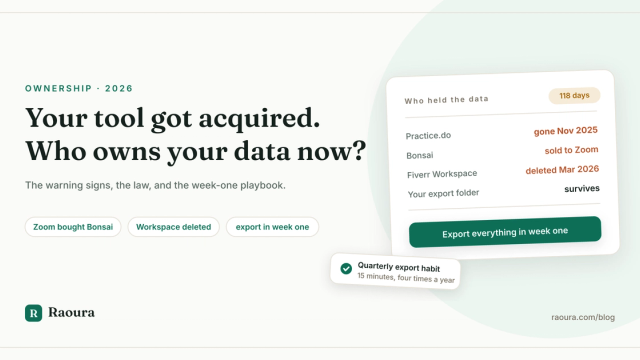
What Happens to Your Data When Your Freelance Tool Gets Acquired
Three freelance client tools were acquired, absorbed, or deleted in a 118-day window: Practice.do died, Zoom bought Bonsai, and Fiverr erased Workspace. Here is what legally happens to your data in an acquisition, the warning signs that show up months early, and the 7-step plan for the first week after the announcement.
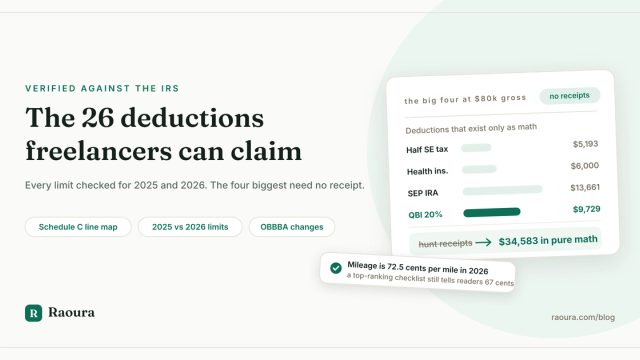
Freelance Tax Deductions: The 26-Item Checklist (Verified Against the IRS, 2025 and 2026)
We fetched the top-ranking freelance deduction checklists in July 2026. One still cites the 2024 mileage rate as current. One lists meals and entertainment as a deduction heading eight years after entertainment became nondeductible. One tells you to guesstimate your business-use percentage. And none of them mention the July 2025 law that changed seven of these numbers. Here is the checklist with every figure traced to the IRS: all 26 deductions, the Schedule C line each one goes on, the 2025 and 2026 limits side by side, and the four big deductions that never show up on a receipt.
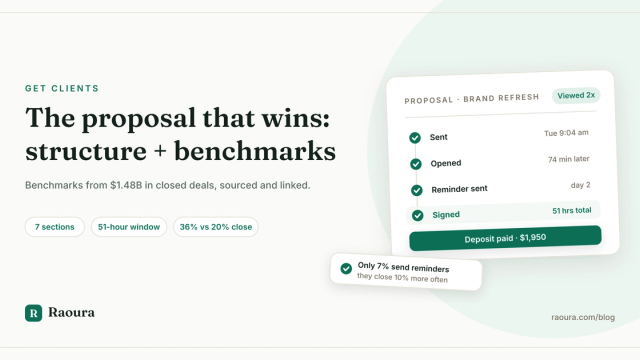
The Freelance Proposal That Wins (Structure + Benchmarks)
The top-ranking advice on writing a freelance proposal contains zero cited win-rate data. This guide is built from the two datasets that actually exist: Proposify's proposal benchmarks and Better Proposals' analysis of $1.48 billion in closed deals. The 7-section structure, the 51-hour decision window, the follow-up cadence only 7% of senders use, and what the close-rate gap is worth in dollars.
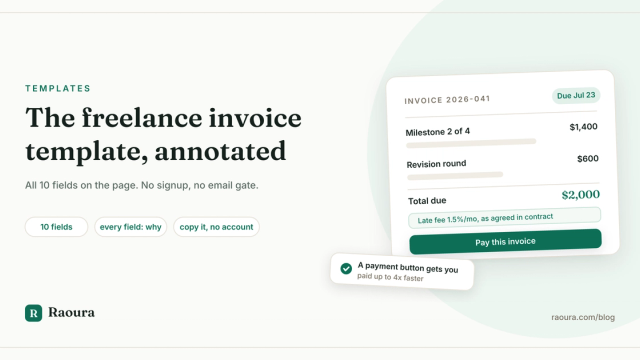
Freelance Invoice Template That Gets You Paid
Of the six top-ranking invoice template pages, two lock the template behind an account and none explains what any field is for. This one is different: the whole template on the page, every field annotated with the data on what gets invoices paid faster, from due-date wording to the payment button that cuts waiting time. No signup, no email.
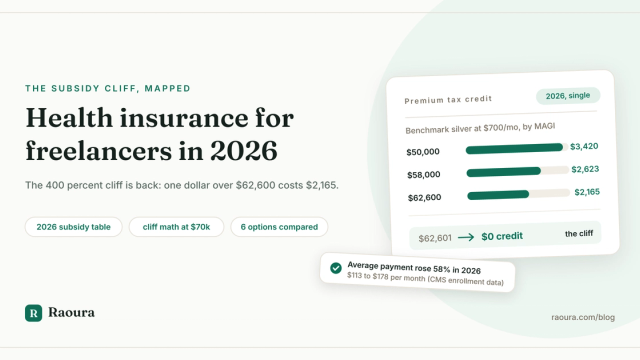
Health Insurance for Freelancers in 2026: What the Subsidy Cliff Actually Costs You
The enhanced ACA subsidies expired on December 31, 2025, and the average marketplace premium payment jumped 58 percent. We fetched the top-ranking guides in July 2026: most still describe subsidy rules that no longer exist, and none of them run the one calculation that matters for a freelancer, how the 400 percent FPL cliff interacts with the deductions you control. This is the 2026 version with the real numbers: the subsidy table that applies now, a worked example at $70,000 of profit, and the three above-the-line deductions that can pull a freelancer back under the cliff and win the credit back.
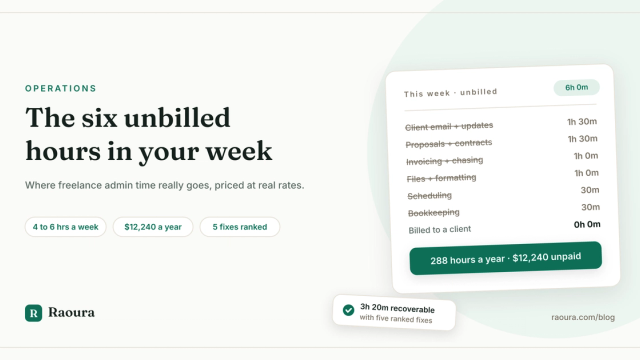
The 6 Unbilled Hours: Your Admin Leak Quantified
Surveys put freelance admin time at 4 to 6 hours a week, and at the median full-time freelance income that is roughly $8,700 to $12,200 a year of unpaid work. Here is where the hours actually go, task by task, and the fixes ranked by minutes saved.